
 By
By After my first stint abroad in SE Asia backpacking on a modest shoestring budget, I was MORE than confident the second time around with Latin America on my radar. If you missed it here’s a refresher on how you can travel on a budget no matter where you’re going in the world.
Can you really do LA on $60 a day all in? Let’s find out!
I allotted myself three months abroad for this stretch, visiting countries that included:
- Guatemala
- Honduras
- El Salvador
- Peru
- Bolivia
With the occasional deviation as with all good trips, you’ll have sidebar adventures too so don’t limit yourself. I didn’t know what to expect from this time around money wise as most of my traveling friends have only ever visited these countries on holiday. Their tricks and tips were invaluable, but this would be an entirely new experience based on how long I will be going for.
I stuck to my guns and followed the formula that has worked so well on my last stint abroad. Keeping it simple and saving on costs by practicing the following:
- Staying in hostels (almost exclusively)
- Slow-mode of transportation (buses/trains/tuktuk/ect.)
- Eating street food and where locals eat
- Saving the big bucks for adventures
Before I dive into the nitty details I want to mention that my only other comparison will be my trip to SE Asia. Take everything about to be discussed with a grain of salt and +/- $10 on the budget, ha.
You can book nice upscale lodgings on your trips, but that would defeat the purpose of making your money stretch when abroad for months on end. With no real income you have to make sacrifices for the experiences. For this I have always and will continue to recommend staying in hostels.
They provide so much of the essentials for solo backpackers:
- cheap bed to sleep in
- same amenities of the more expensive options
- knowledgeable staff that can be very helpful in your planning of destinations, activities, or just the best local spot for food
- they work with local adventure outfits — usually saving a few bucks (can add up)
- other like minded travelers — you never know who you’ll run into
This short list of pros were enough for me to choose hostels every time. I paid on average between $11-$17 a night for some of the lodgings during my trip. As a rule of thumb the cheaper options normally offer a no frills stay, often without air-con (either as a whole or in the dormitories) or the ever elusive free Wi-Fi (sometimes located only in one central area of the hostel.)
You might just get lucky with a hostel/homestay offering all the above mentions at a great price! I’d usually find these gems during the off season when tourism slows down. It’s the Goldilocks of hostels, honestly. Plus, with the money you save on cheaper accommodations you can put back into a nice excursion or a night or two at some fancy, swanky locale for some personal R&R time!
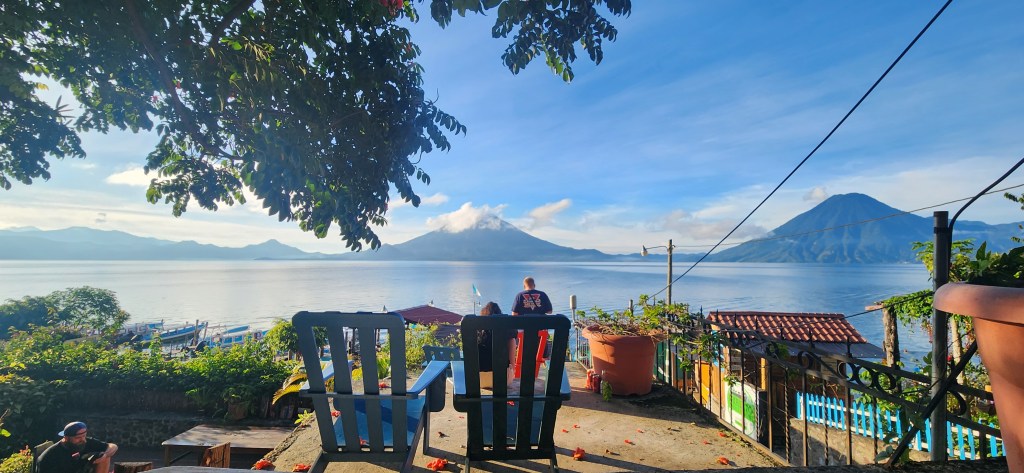
La Perdida Iguana — Where the vibes match the views. 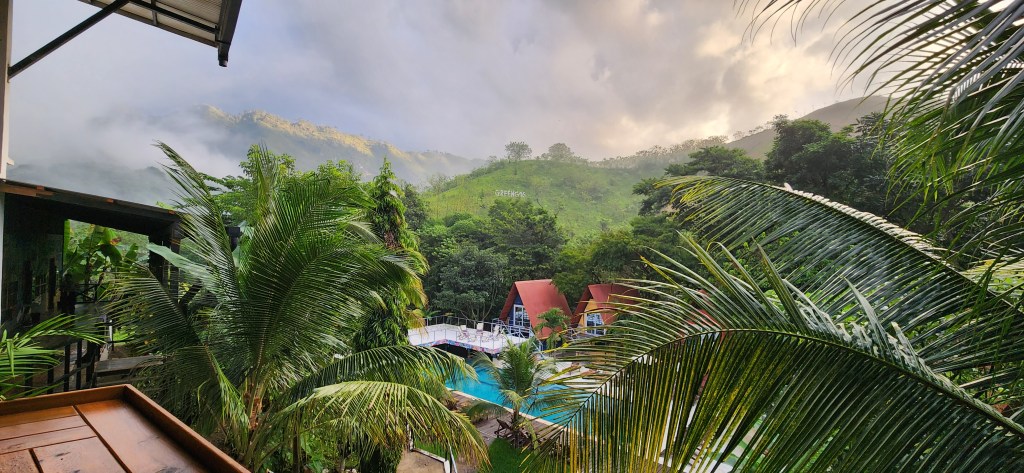
Greengos in Semuc Champey. A hostel oasis in the middle of the jungle. 
Beach Views for Only $14/Night. 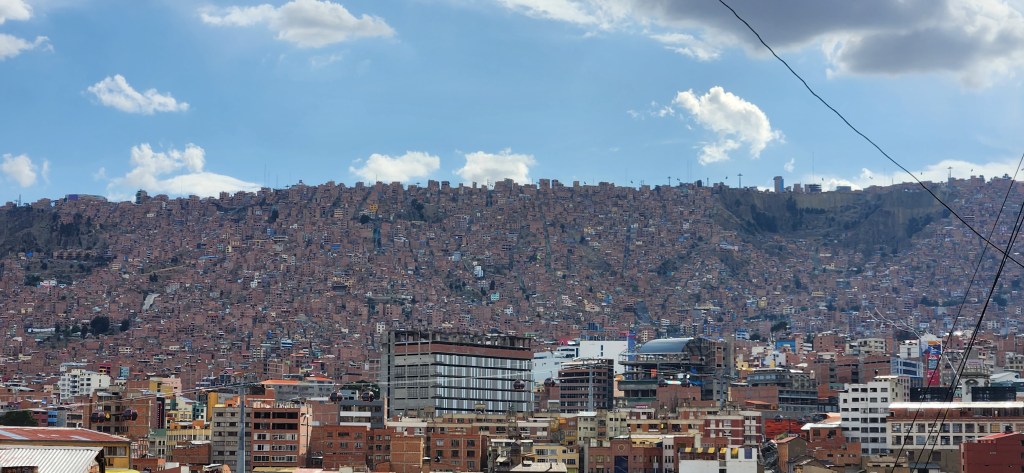
Contrasting Views of La Paz, Bolivia. 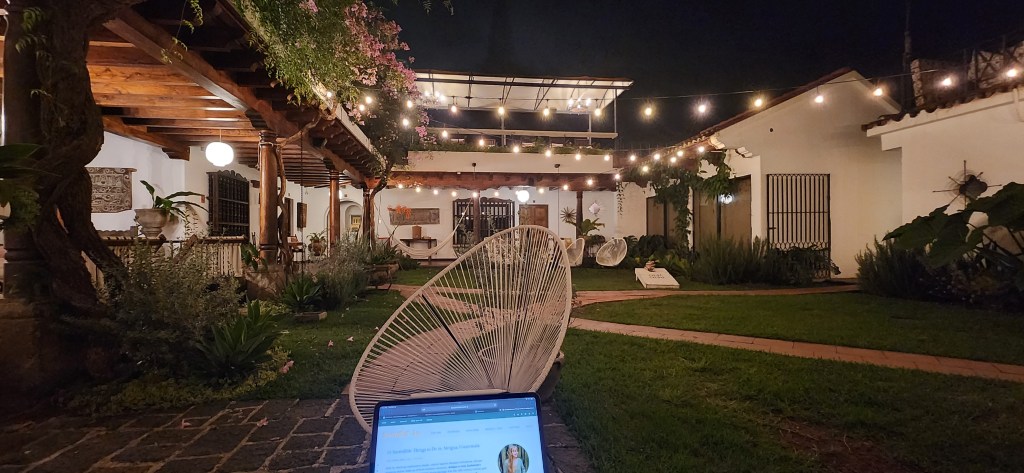
My first hostel in LA and it didn’t disappoint. 
Sometimes you won’t get bunk beds, but a cottage on the side of a dormant volcano. Choose your adventure.
Cheap and slow wins the race, when it comes to getting around that is. Or the very least you have a few bucks left in your back pocket. My tried and trued method of getting around anywhere abroad has been buses, trains, tuktuks, and now even boats. Instead of Ubers, taxis, private car hires, or flying, you can save A LOT by going at it cheap and slow.
Latin America’s gringo trail (phrase for the backpacker route) is still in its developing stages. Which means getting around might be a little bit tougher, in comparison to SEA. Getting around was daunting at time with no set schedules, strikes that can happen at any moment, or having 8 transfers just going two hours away. Though, that’s the fun in backpacking ain’t it?!
Transportation in LA can be either super expensive or cheaper than dirt. Without dedicated bus routes like in SEA you’ll be finding yourself booking shuttles to get around. These were the norm in central American countries like Guatemala, Honduras and El Salvador (Costa Rica as well on a previous trip I took.) These shuttles were often for tourists and can cost from $45-$60 depending on origin and destination. WHICH IS EXPENSIVE AS FUCK when I look back at an overnight bus in Cambodia from Sihanoukville to Siem Reap for $10.
On the flipside you can board chicken buses and ride them for less than $0.50. If you can navigate the local buses, know the stops and location you CAN get around relatively cheap. Brush up on your Spanish and watch out for your things if you do take this route. In El Salvador I ended up riding chicken buses (locals actually do not refer to them as this) more and more and even took my chance at hitchhiking (fun, but not recommended for every time.)
Peru was heaven for slow mode of travels because their network is more extensive. I was riding luxury overnight buses from one destination to the next for less than the cramped shuttles of central America. The vibe was so different than what I was experiencing before I arrived in South America, by the time I did it felt like home again. Least while I was on the bus.
You can travel on boat taxi for $1/ride like I did Atitlan in Guatemala. I can still hear those lads shout “San Marcos?!,” and “Santa Cruz?!” Put a bag cover on your luggage cause they will be getting wet on them boat taxis!
Remember the gringo trail is STILL developing in these Latin countries so in future I only have high hopes. The network will get flushed out as with the transport options available to travelers, backpackers and holiday’ers alike. I can only imagine how much fun it was to travel back in the days before smartphones!
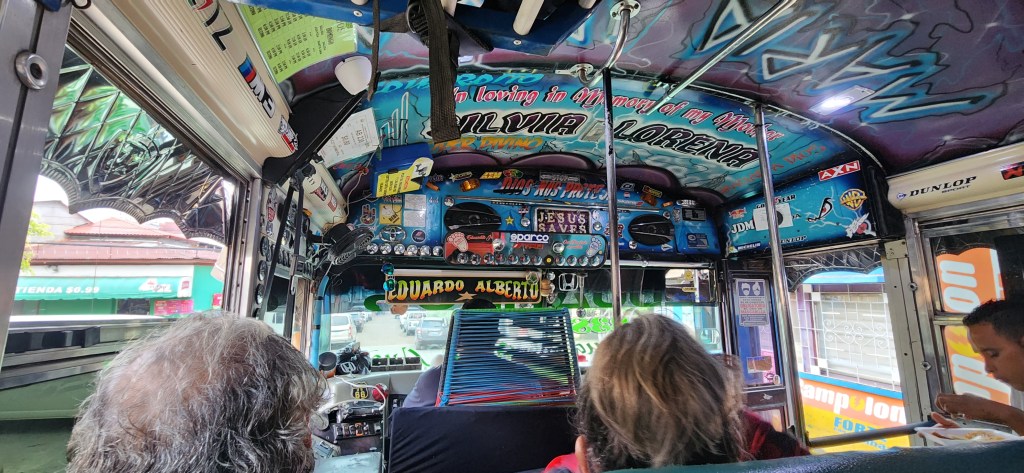
When a tourist — travel like the locals. Chicken buses are cheap and abundant. P.S. they aren’t really called chicken buses by the locals. 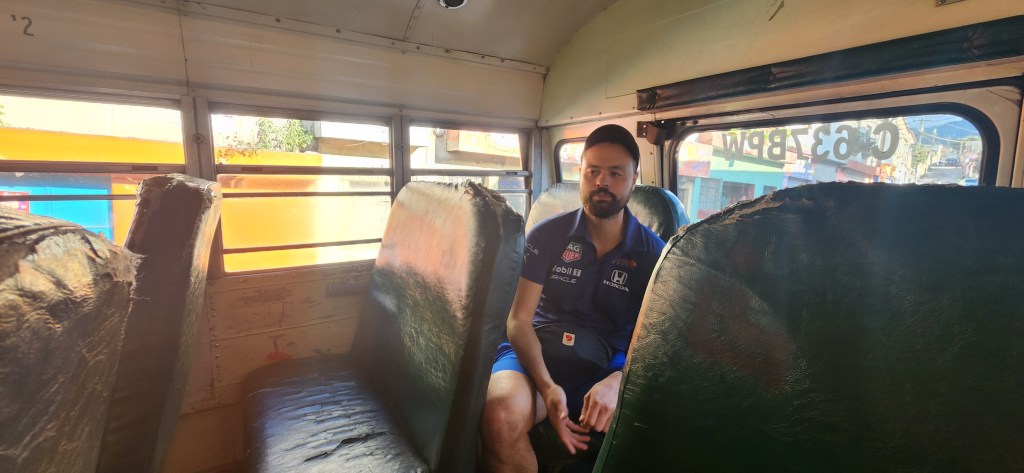
Half the fun is figuring out how to get home. Patrick did a fantastic job for us that day. 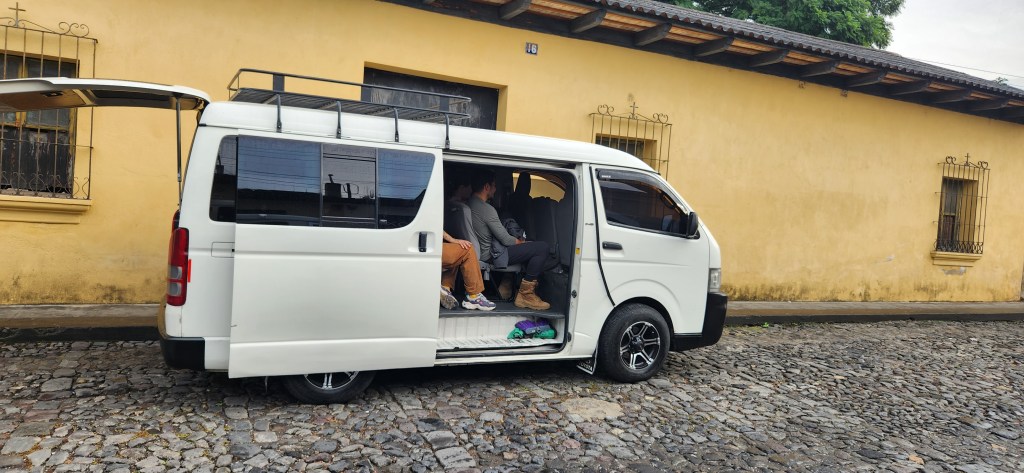
Gringos. Cramped van. All familiar site. 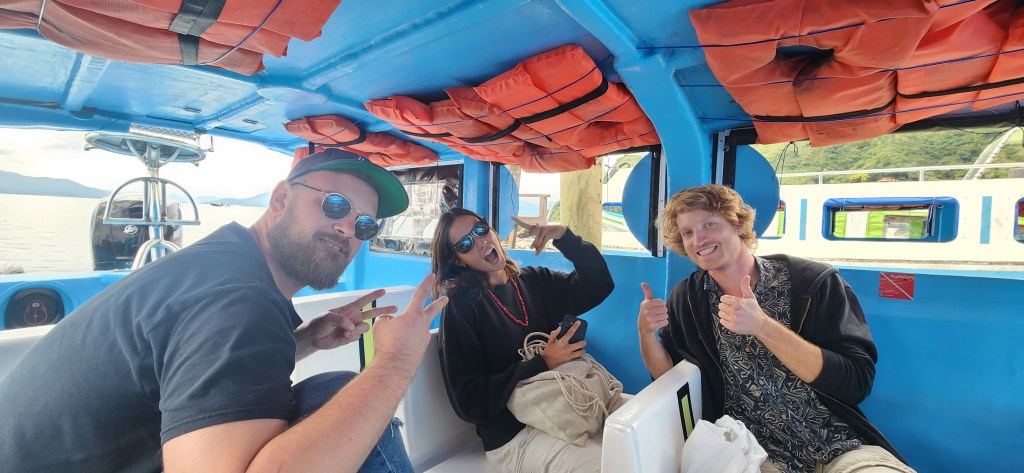
Boat taxis are now a thing for me. 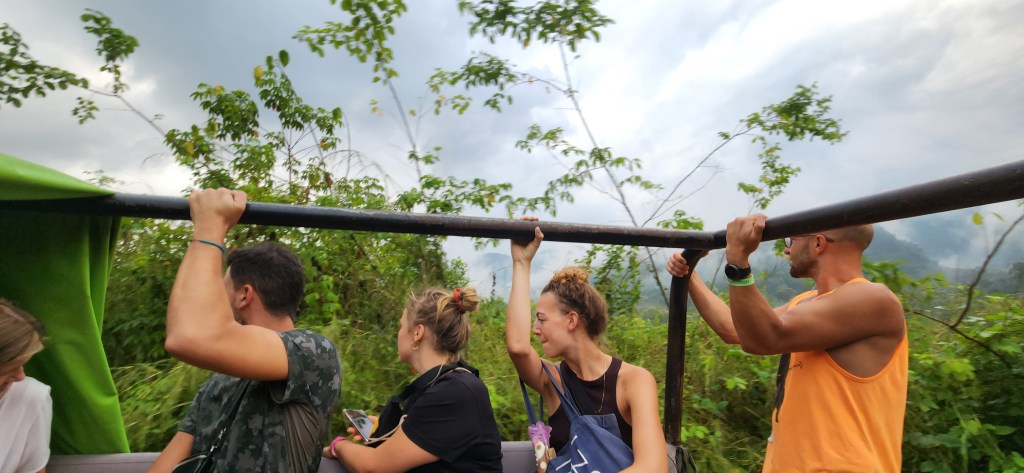
Also, back of a pickup holding on for dear life as well. 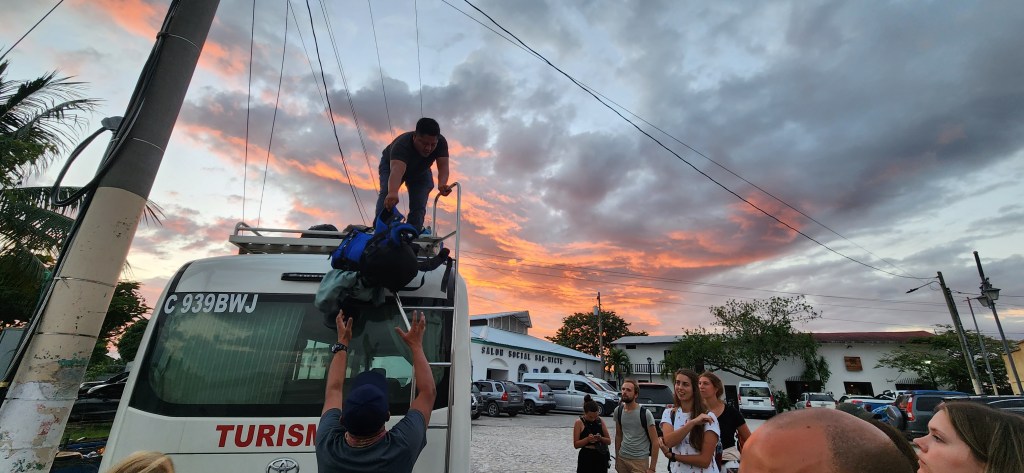
After long journeys that start in the morning and ends right before evening. I do miss these dearly.
Food is a topic that I will always splurge on, I mean who doesn’t travel for the food?! I had nothing but high hopes for the culinary experience in which my belly was about to undertake. From gorging myself in the streets throughout SEA my mind was hyped on all the tacos, pupusas, ceviche and savory dishes LA had on offer.
My experience was a complete mix bag from uber cheap street options to fine dining in the jungle. I had gone into this trip not wanting to spend more than $10-$15 a day on my meals. How? I offset a lot of the cost of food by choosing hostels that included breakfast in the price of accommodations, which left primarily lunch, dinner and the occasional going out.
Of all the countries I visited I will say El Salvador, Honduras and Bolivia were among the cheaper options when it came to food. They had more varieties in terms of street food that is after my own heart, a couple of dollars for a full meal, to more upscale choices of dine in where the price reflects the quality and service. That isn’t to say Guatemala and Peru were expensive, they aren’t compared to prices stateside. But they are geared more towards the tourist as these two countries have been the hub for backpackers for however long now.
A small list of what you can expect to eat across those countries:
- Street hotdogs in Guate: $1.50
- Loaded baleadas w/smoothie in Honduras: $6.23
- Buffet lunch w/locals in El Salvador: $4
- Surf and turf dinner in Peru: $11.22
- Full Irish Breakfast & soda in Bolivia: $12.75
I did splurge, a lot, this time around on food. So many memorable meals in all of the countries I visited, but the stops in Guate sticks out like a full belly. From Bernie’s spot in Flores, to the Dreamcatcher Hostel’s kitchen team. Dinner there ran me $40-$70 and you know I still dream about them ’til this day. What I also did more this time around was snacking. It seemed every night I would go to the local bodega or supermercado to buy a few dollars worth of snacks to munch on. Don’t be fooled, those few dollars equated to enough snacks for a few days. And I did this almost nightly.
Food is more expensive in the grand scheme of things. In the long run it is still cheaper than anything we can get stateside, but your dollar can be taken a lot further in SEA.
Water is an important topic when traveling to developing countries. If you stay in a hostel or hotel then chances are they will provide clean drinking water for you. Otherwise you’ll be picking up liters at at time when you go for those snack runs.


Alpaca steak at Yaku in Cusco. 
A little taste of familiar flavors. 1. Indian curry. 2. Curry udon. 3. Osso buco. 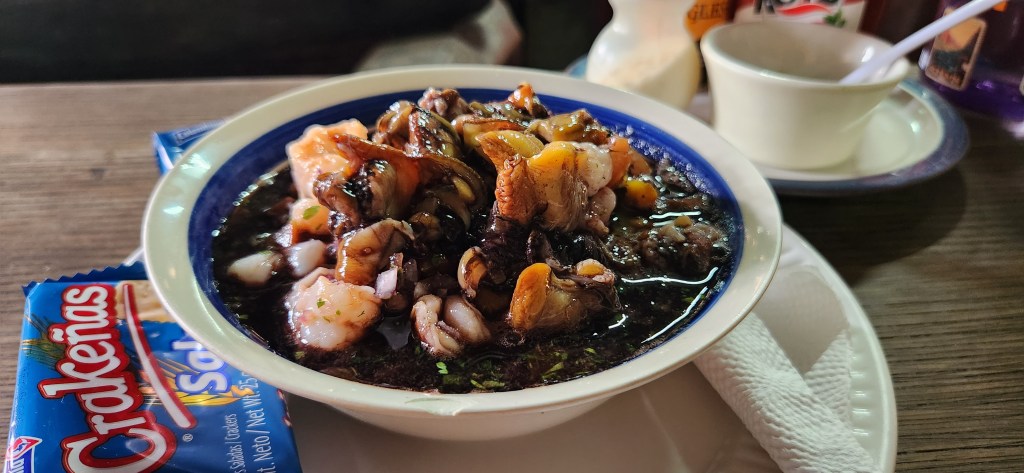
Unassuming ceviche that slapped so hard. 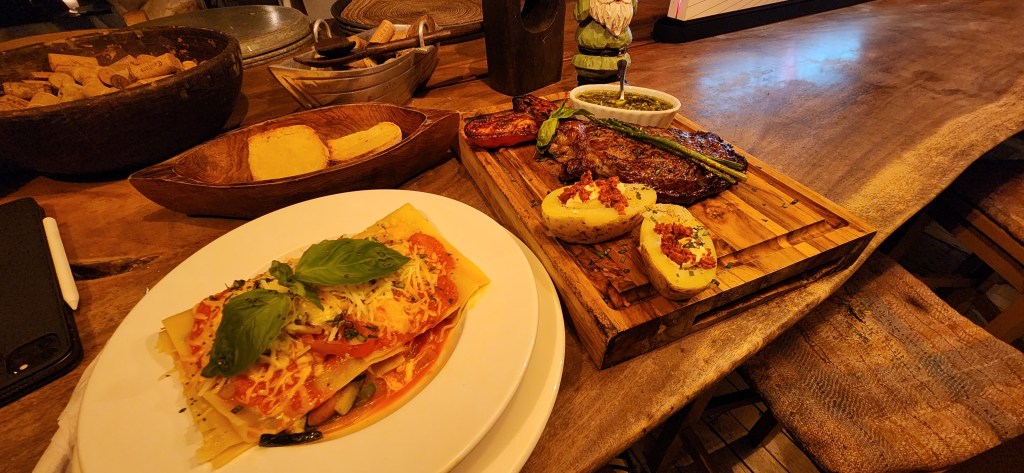
Argentinian steak at a floating hotel on a river, what an experience. 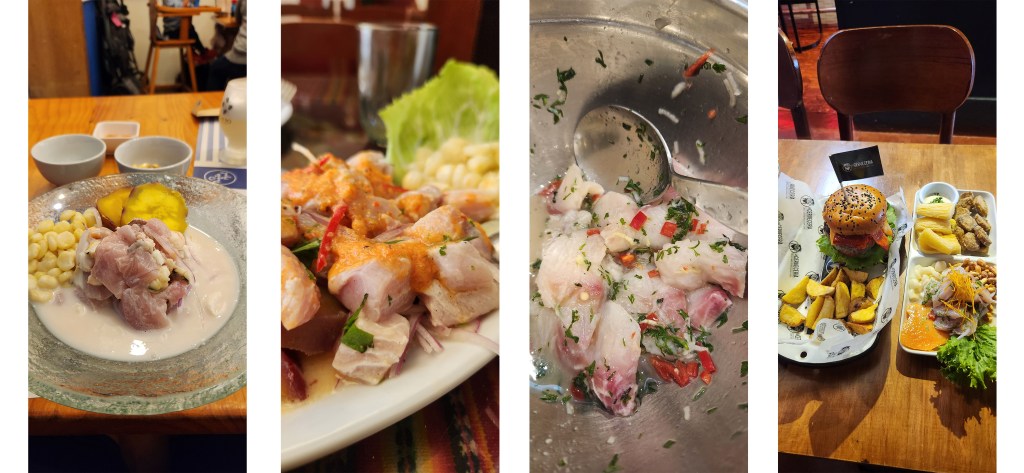

1. Pupusa Loco next to a regular sized. 2. Seafood pizza. 3. Seafood soup w/whole fish/langosteens/crab. 4. Finish strong with quesadilla and a milkshake. 
Dinner at Bernie’s … filet with blue cheese sauce and roasted veggies. Unforgettable. 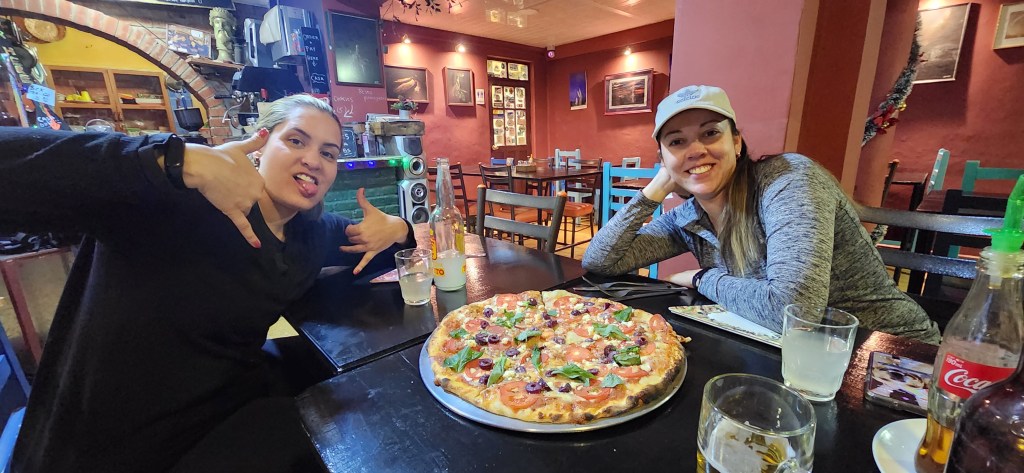
| Country | Total Days | Currency Conversion USD| Local | Total Spent in Local Currency | Total USD | Daily Average |
| Guatemala | 32 | $1 | 7.816Q | 16,153Q | $2,047 | $63.95 |
| Honduras | 7 | $1 | 24.85L | 8,883L | $360 | $51.43 |
| El Salvador | 13 | $1 |$1 | $666 | $666 | $51.23 |
| Peru | 31 | $1 | 3.86S | 6,610.36S | $1,712.53 | $55.25 |
| Bolivia | 10 | $1 | 6.9BS | 5,215.5BS | $755.87 | $75.59 |
| Total | 93 | $5,541.4 | $59.49 |
For a three month trip abroad solo backpacking $5,550 is not ENTIRELY terrible if you asked me! Breaking down the cost you can see what some of the more expensive countries were, in this case Peru and Guatemala. To be fair I did spend the bulk of my time in these two countries either adventuring or learning Spanish respectively.
Notice how my daily expenditure was JUST about $60 a day! This would be a great starting point for anyone who wants to live just a tad bit above the shoestring level but do not want to burn through their cash too quickly.
Of course in comparison to Asia where I spent six months abroad and a grand total of $5,368 for daily living, LA can look a bit more expensive. SEA was about $35/day where this is nearly twice as much. Take things with a grain of salt as transportation and food were more expensive.
Also, in addition to some of the costs were misc. items like flights and visas. Not often could I’ve traveled the slow and cheap method, having to book a flight from country to country, like El Salvador to Peru, or Peru to Bolivia because roads weren’t open. Other expenses laid in the form of traveler’s insurance (a must have when abroad for long periods of time), a hotel stay here or there for some needed downtime, and I even got myself a few gym memberships while on the road!
All in all there weren’t TOO many other unexpected expenses, which makes me think just how much cheaper I could have made this trip.
Now for the fun stuff, literally! Part of traveling is immersing yourself in local culture, partaking in activities, and adventures wherever and whenever you can. My excitement for what adventures Latin America would lend itself to me were bursting at the seams before I even took off.
Hikes, diving, cooking classes were all on my radar for my time abroad. I made no qualms about spending the big bucks for excursions that would take me away and beyond my comfort zone. From overnight hiking trips to active volcanoes, spelunking in the jungle, trekking to Machu Picchu, standing in the middle of the Bolivian salt flats, or diving with whale sharks — yo soy listo!
Having saved money on accommodations, getting around and SOMETIMES on food, I stacked up a bit of side money. These excursions weren’t too expensive in the grand scheme of things, but being abroad for a few months at a time you have to be careful with what you spend it on. For example here’s a few of the excursions mentioned and their costs:
- Acatenango Hike: $117
- Spanish Academy: $162
- Two Tank Fun Dive: $130
- Uyuni Salt Flat Tour: $200
- Cusco Cooking Class: $60
- Peruvian Chocolate Making Class: $25
- Machu Picchu Tour: $131
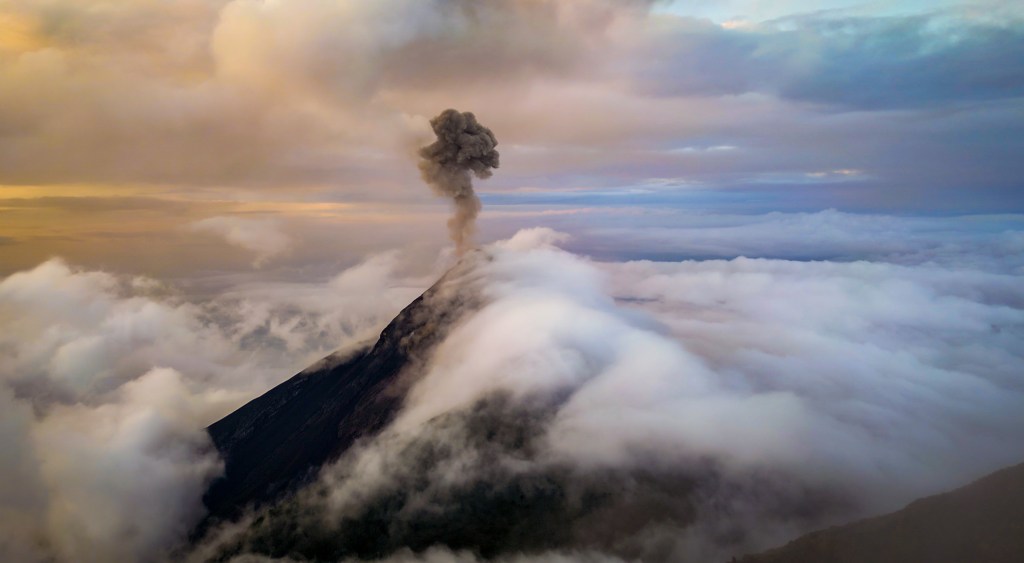
Not often will you get to hike to an active volcano, so take the opportunity! 
Strangers on a hike turned out to be some amazing mates. Thank you for the time in Huaraz! 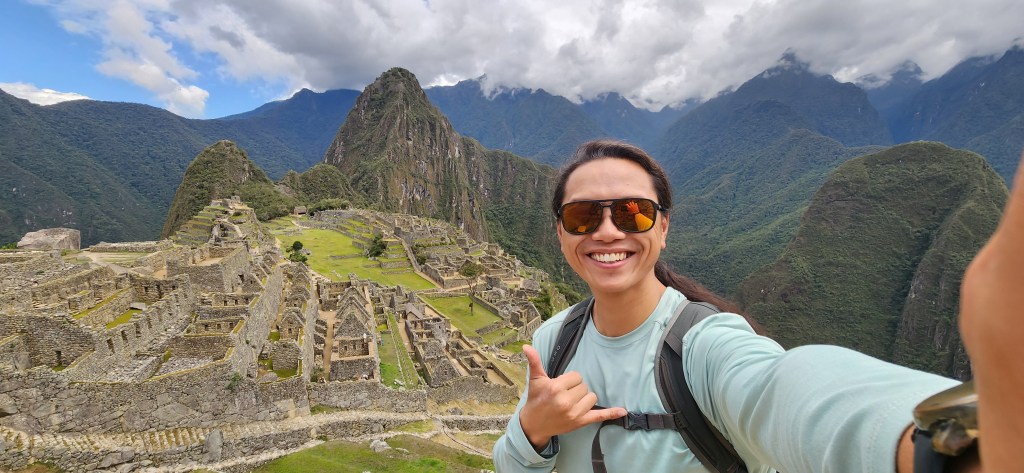
Selfie at Machu Picchu. 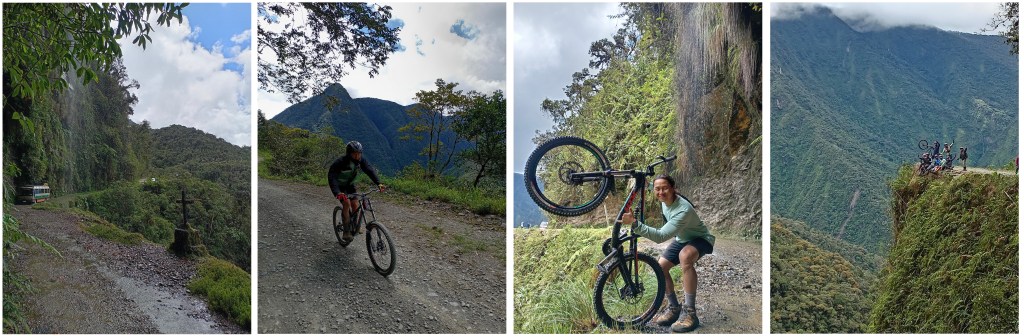
Adventures complete with a dive bomb on Bolivia’s Death Road. 
One of the greatest races in the world, the Dakar. 
Post spelunking fun in Guatemala. 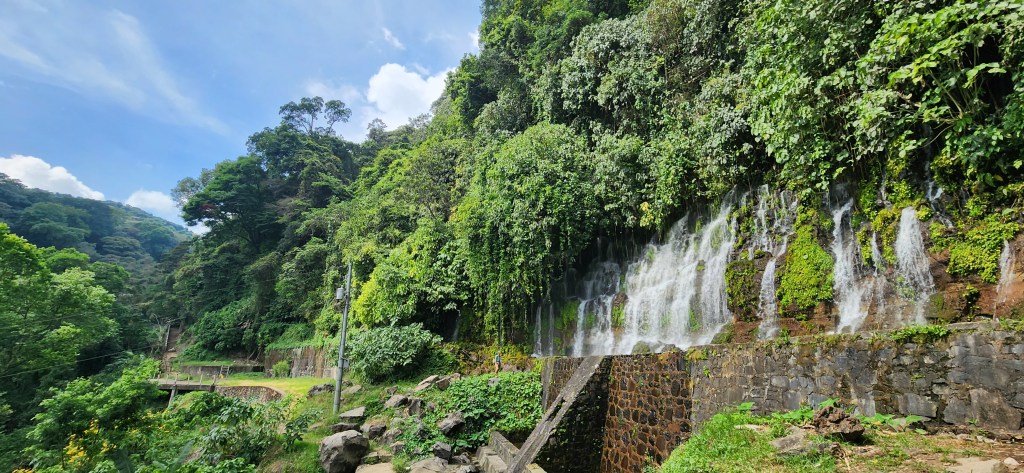
The views in the jungle were HARD to beat. 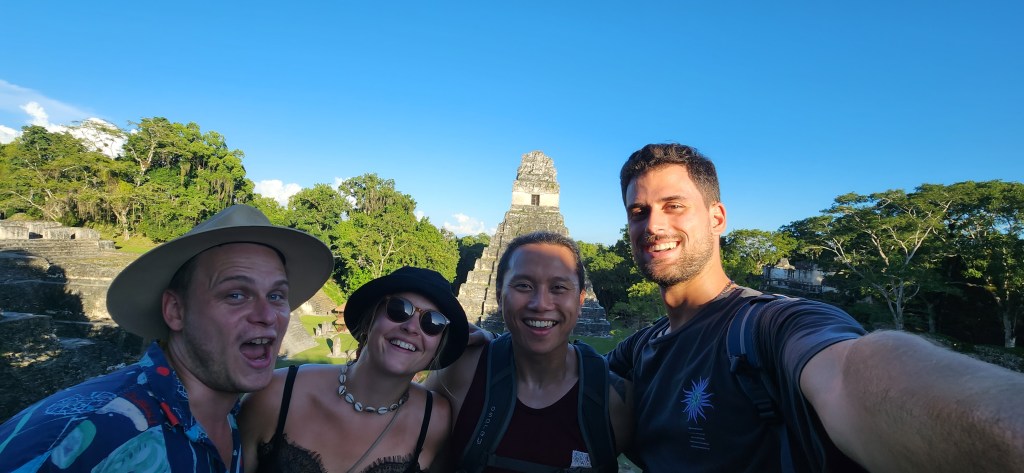
Afternoon stroll in Tikal.
Excursions can sometime be quite pricey all things considered. While you can do your best to keep costs down, when it comes to adventuring you just got to suck it up. This is where having those extra savings you accrued from transportation, lodgings and food comes in handy! Just remember having experiences to retell is always better than a shot glass to show.
Would I still do everything that I did on my trip? Does a bird fly? Is the sky blue? Will my local taqueria always be out of lengua? The universe points to a resounding yes!



 theroamingnoodle
1 comments on “Backpacking Latin America on $60 a Day”